
The Witch's Bakery Gameplay: A Cozy Beginner's Guide
Explore The Witch's Bakery gameplay, from magical baking and Paris friendships to Heart Palaces, romance, and demo save mistakes to avoid before you play.
Jump to
What Does The Witch's Bakery Gameplay Involve?
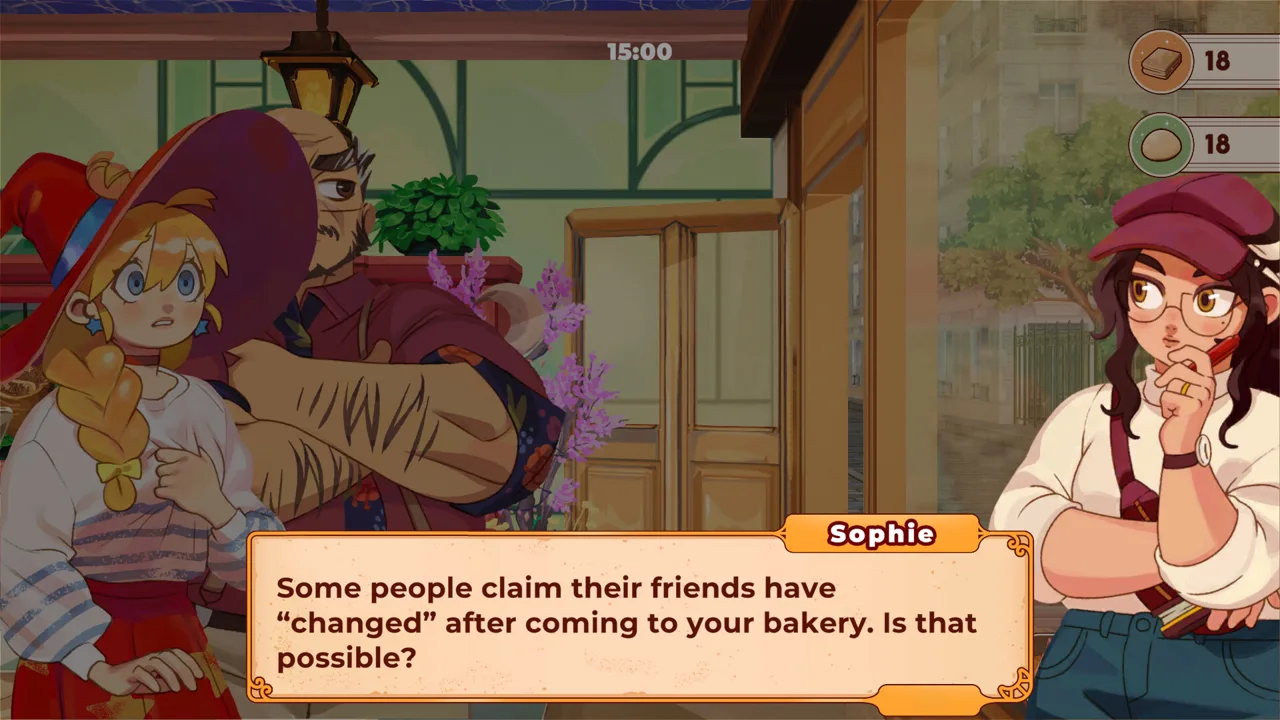
A warm croissant can carry some serious emotional weight in Lunne’s Parisian bakery. The Witch's Bakery gameplay combines serving customers, exploring the city, and helping friends work through their troubles, so understanding that balance helps you decide whether this cozy adventure fits your mood. At its heart, The Witch's Bakery gameplay follows a character-driven story, with approachable activities supporting Lunne’s journey.
You play as Lunne, a cheerful witch who has recently arrived in modern Paris and opened a bakery. Her special talent gives that everyday routine a magical purpose: she can look into people’s hearts and heal their emotions through baking.
Expect plenty of reading, conversations, and time spent getting to know people. The adventure has a strong visual novel influence, and its mechanics are designed to accompany the narrative.
| Feature | What to expect |
|---|---|
| Main character | Lunne, a witch opening a bakery |
| Setting | Modern Paris |
| Structure | Daytime, evening, and night phases |
| Main activities | Baking, serving customers, exploration, friendships, and emotional healing |
| Multiplayer | Single-player only |
| Playthrough length | Around 25–30 hours or more, depending on reading speed and playstyle |
The distinction matters if you’re arriving mainly for the shopkeeping. Baking and serving are part of the experience, but the characters’ lives give those activities their context. A customer’s troubles can become part of Lunne’s larger adventure, connecting her work behind the counter with her friendships around the city.
Read at a comfortable pace and give conversations your attention. With so much of the adventure built around personal stories, dialogue deserves as much attention as the next batch of bread.
How Daytime Baking and Nighttime Preparation Work
The Witch's Bakery gameplay follows a daily rhythm that gives each part of Lunne’s life its own space. Work occupies the daytime, Paris opens up during the evening, and nighttime brings her back to her atelier.
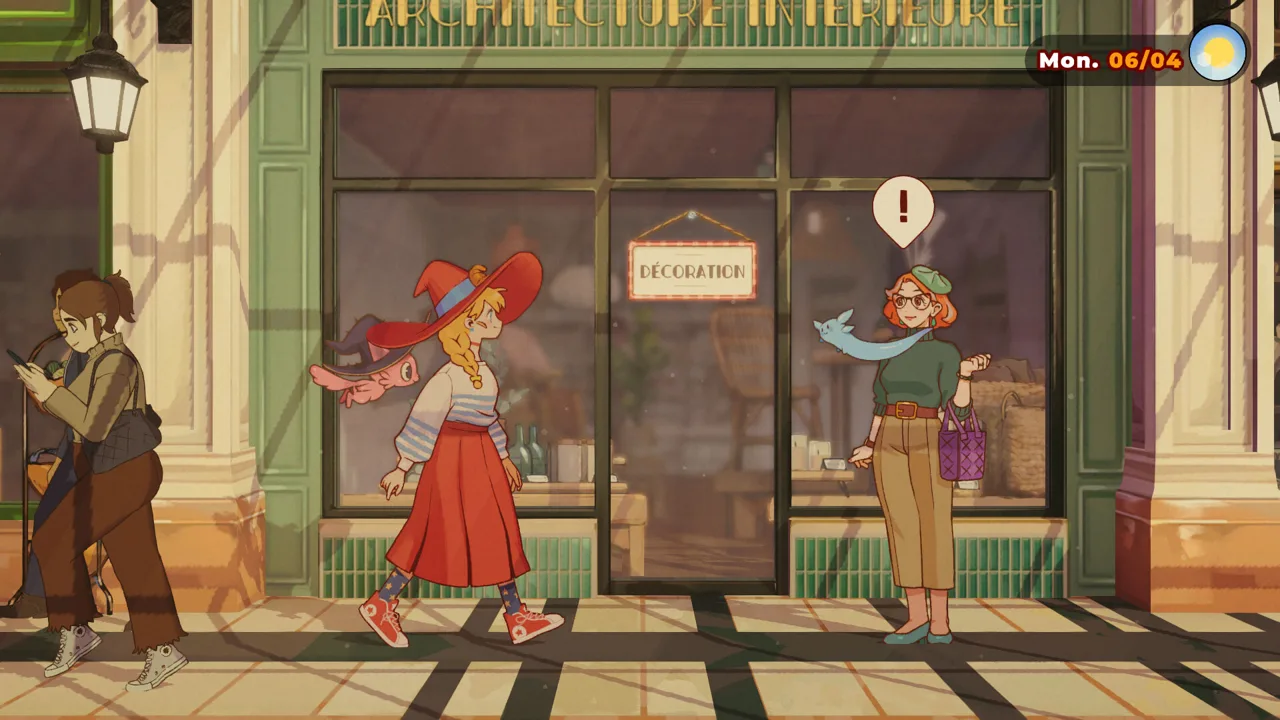 Image: Steam / Sunny Lab
That structure makes the overall loop easy to understand before you start. You’ll spend time running the bakery, step outside to connect with the city, and return to improve Lunne’s magic and personalize her surroundings.
| Phase | Main activities | Focus |
|---|---|---|
| Daytime | Work in the bakery, serve customers, and use magic to help with their troubles | Bakery life and customer interactions |
| Evening | Visit Parisian districts, build relationships, and enter troubled hearts | Exploration and character stories |
| Night | Rest, improve magic, decorate the bakery, and spend time in the atelier | Personal space and magical development |
Make room for the people behind the orders
During the day, Lunne serves customers and works alongside her friends. Her bakery is both a business and a place where people bring their emotional baggage.
Pay attention to the customers’ troubles alongside the food you’re preparing. Lunne’s ability to help people through magic is central to her role, and the connection between emotions and bread carries through the adventure.
The Witch's Bakery gameplay also includes earning experience, money, and fame as the story moves through successive days. Those measures sit alongside meeting new friends and healing hearts. Progress has both a practical side and a personal one: Lunne is establishing a business while finding her place in Paris.
Use the atelier as part of the routine
Nighttime includes improving Lunne’s magic and decorating her bakery, with time spent in her cozy atelier. This gives the daily schedule a quieter stretch after work and exploration.
Include those activities in your understanding of the game from the start. The bakery’s appearance, Lunne’s magical abilities, and her working life all belong to the same routine.
Follow the three phases as they arrive and enjoy their different purposes. The structure gives you a natural shift between serving people, learning about them, and returning to Lunne’s own space.
Explore Paris and Build Friendships
Evening exploration is a substantial part of The Witch's Bakery gameplay. Once work ends, Lunne can visit several districts, meet characters, take part in activities, and browse shops.
 Image: Steam / Sunny Lab
Paris gives those outings a recognizable setting. Famous neighborhoods sit alongside quieter walks, while different districts have their own characters, activities, and stores. Exploring means spending time with the people who live there as well as seeing the sights.
| Place or activity | What you can encounter |
|---|---|
| Montmartre | Streets from one of Paris’s famous districts |
| Grands Boulevards | Another recognizable part of the city |
| Le Quai des Bouquinistes | A riverside bookselling area associated with books and collectible goods |
| District shops | Shopping opportunities, including books for new recipes |
| Character activities | Opportunities to get to know people and learn skills |
Look for recipe books while exploring
New recipes connect your time outside the bakery with your work inside it. Books available during city visits can teach Lunne additional recipes.
Check shops for recipe books when you explore a district. This is a concrete reason to pay attention to shopping opportunities alongside character encounters: a walk through Paris can contribute to Lunne’s baking repertoire.
Keep the neighborhood’s other activities in view, too. Characters, shops, and shared experiences all help make each district part of her daily life. Let those different interests guide your outings.
Follow friendships at a conversational pace
Relationships are a major reason to leave the bakery each evening. Lunne meets a wider cast, spends time with friends, and discovers the city’s secrets through her adventures.
Listen to what matters to each character. The emotional healing at the center of the story gives those personal details a purpose beyond casual small talk. Your time with friends is part of understanding the people Lunne wants to help.
For romance, Estelle is the character to know. Lunne first meets her in Chapter 2, and narrative choices determine whether their relationship becomes romantic.
Pay attention to those choices if you want to pursue Estelle. Other characters offer meaningful friendships, while this particular relationship can develop into romance. You can approach the social side with that distinction in mind without needing to rush past everyone else’s story.
How Heart Palaces Connect Magic and Baking
Heart Palaces give The Witch's Bakery gameplay its clearest connection between emotional storytelling and magical adventure. Some people have feelings locked away so deeply that Lunne needs to enter their hearts to help.
 Image: Steam / Sunny Lab
Inside a Heart Palace, thoughts and emotions take physical form. Lunne encounters a personified Emotion and needs to guide it back to the Heart’s Cradle. She also discovers more about that person’s struggles and finds the key ingredient for bread that can heal them.
| Heart Palace element | Role in the adventure |
|---|---|
| Thoughts and emotions taking shape | Turn a character’s inner world into a magical space |
| Personified Emotion | The being Lunne needs to guide |
| Heart’s Cradle | The destination for that Emotion |
| Character’s struggles | The personal story Lunne uncovers |
| Key ingredient | Connects the Heart Palace journey to healing bread |
The important connection is between understanding someone and baking for them. Entering a heart lets Lunne discover what that person is carrying, while the ingredient she finds brings that discovery back into her work.
Follow the personified Emotion’s objective and pay attention to the character’s story as it unfolds. Both belong to the same task: helping someone reconnect with an emotion that has become difficult to reach.
Think of the bakery and Heart Palaces as connected parts of Lunne’s craft. Her magic lets her enter an emotional world, and her baking gives her a way to carry that help back into everyday life.
That connection gives the routine its personality. The bread matters because of the person receiving it, and the magical journey matters because Lunne is trying to understand that person. If character stories are what draw you into cozy games, give these sequences time to unfold.
Start Your Adventure Without the Demo Save Problem
Before settling into The Witch's Bakery gameplay on Steam, take care of one essential setup issue if you played the demo: start a new game in the full release.
The full game can recognize an old demo save and display a Continue option. Demo saves are incompatible with the release version, and continuing one can cause progress to get stuck later.
Follow these steps if you previously played the Steam demo:
- Right-click The Witch’s Bakery in your Steam library.
- Open Properties.
- Select Game Versions & Betas.
- Check that you’re using Default Public Version.
- Launch the game and choose to start a new game.
The demo branch has been removed, but the old save can remain. Seeing Continue on the menu does not make that demo adventure suitable for carrying into the full game.
Set aside time for the story
Plan for around 25–30 hours or more, with reading speed and playstyle affecting the total. Give yourself time to enjoy conversations, city visits, and the personal stories behind Lunne’s healing magic.
Keep these priorities in mind as you begin:
- Read character dialogue carefully. Relationships and emotional stories are central to the adventure.
- Check shops for recipe books. Paris exploration includes opportunities to learn new recipes.
- Use nighttime for its available activities. Rest, magical improvement, decorating, and atelier time belong to that phase.
- Notice narrative choices involving Estelle. Those choices shape the possibility of romance.
- Start fresh after the demo. Avoid carrying an incompatible save into the release.
The game launched digitally on October 14, 2026, for PC and consoles. Steam includes full controller support, achievements, and Steam Cloud, giving PC players several familiar conveniences around the adventure.
If you’re ready to open the bakery, you can get The Witch’s Bakery on Steam. Arrive ready for a story about friendship, vulnerability, and finding a place in a new city—with plenty of magical baking along the way.
FAQ
What is the main focus of The Witch's Bakery gameplay?
The Witch's Bakery gameplay centers on a narrative adventure about Lunne and her friends in Paris. Baking, serving customers, exploring districts, and entering Heart Palaces support that story. The activities are designed to be simple and approachable, with a strong emphasis on dialogue and characters.
How long does The Witch’s Bakery take to finish?
Expect around 25–30 hours or more, depending on your playstyle and reading speed. Give conversations and character stories room in your schedule, since reading is a substantial part of the experience.
Can you romance characters or play cooperatively?
Estelle is the romance option, and Lunne meets her in Chapter 2. Your narrative choices influence how their relationship develops. The game is single-player, so there is no cooperative or multiplayer mode.
Can you continue your demo save in the full game?
Start a new game instead. Demo saves are incompatible with the full release and can cause progression problems, even when Continue appears on the menu. On Steam, also check that the game is set to Default Public Version under Properties, then Game Versions & Betas.
Continue with
 The Witch's Bakery How Long to Beat: Playtime GuideThe Witch's Bakery how long to beat explained: plan for 25–30+ hours, understand the daily routine, and avoid demo save issues before you begin playing.
More in Guide

The Witch's Bakery Beginner Guide: 10 Essential Tips
The Witch's Bakery beginner guide covers dough, customer patience, recipes, and Heart Palaces. Start strong with practical tips for starting out in Paris.
The Witch's Bakery Controls: PC and Controller Guide
Learn The Witch's Bakery controls, explore PC controller support and remapping, and get practical tips for baking, serving customers, and healing hearts.
The Witch's Bakery Daily Cycle: A Guide to Each Phase
Learn The Witch's Bakery daily cycle, from magical baking and Paris friendships to Heart Palaces, nighttime upgrades, and avoiding demo save problems.
The Witch's Bakery Walkthrough: Days 1–12 and Puzzle Tips
Follow The Witch's Bakery walkthrough through Days 1–12 with dough tips, Ghaldari's hidden shop, Estelle's Heart Palace puzzles, and the demo save fix.
Join the community
Official channels for news, updates and player help: